Businesses I designed, built and run, alongside WebLandscapes. Miami, Florida.
Besides client work, I build my own small brands: each one a real business idea with a working tool at its center, researched before it's built. There are 26 so far, from outage checks and domain checkups to an RFID inventory demo, a typing tutor and a Madrid home-buying guide. The ones closest to IT work are described below; the rest are listed after them.
How they run
Each brand is its own Cloudflare Worker on its own domain: pages are built from one shared layout, with no server to patch.
Every site forces HTTPS, publishes a sitemap and a robots.txt, and is verified in Google Search Console and Bing Webmaster Tools.
Tools that look things up for visitors (DNS, RDAP, page scans) run server-side with caching and rate limits; tools that handle a visitor's own data keep it in their browser.
Photos and fonts are open-license, recorded with their source and licence for every file.
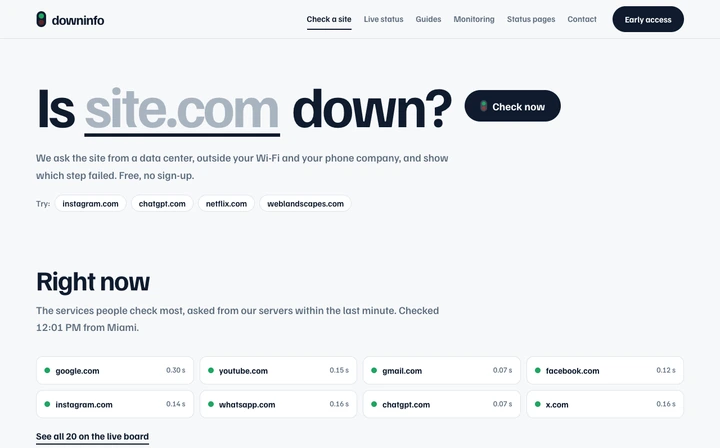
When a site goes down, people want to know whether it's the site or their own connection. DownInfo checks a website the way a browser reaches it, layer by layer: it resolves the name over DNS, opens the connection, checks the certificate and asks the server for the page, and reports the first layer that fails instead of a plain "down".
The checks run in a Cloudflare Worker, so they come from the network rather than the visitor's connection. Results are cached for a minute so a popular site isn't checked thousands of times, and a live board tracks the services people ask about most. Monitoring for small businesses is in early access: a site checked every minute, a text and an email when it stops answering, and reminders before a certificate or domain expires.
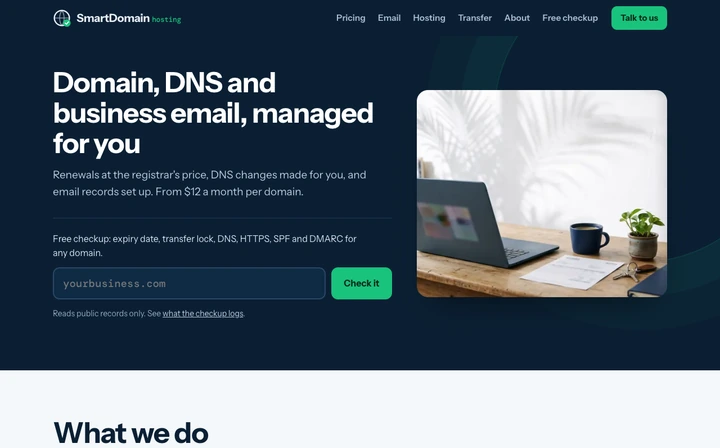
Small businesses often don't know when their domain expires, whether it can be stolen, or why their email lands in spam. Smart Domain Hosting looks after that for them: three plans per domain from $12 a month, renewals at the registrar's price, DNS on Cloudflare, business email on Google Workspace, Microsoft 365 or Cloudflare Email Routing set up with SPF, DKIM and DMARC, and managed hosting for business sites: simple ones on a plan, WordPress and shops on a quote.
The free checkup reads any domain's public records in seconds: registration, expiry, transfer lock and DNSSEC from the registry's own RDAP service, DNS over DNS-over-HTTPS, SPF and DMARC against what Gmail requires of senders, and whether the site answers on HTTPS. Every finding says what it means and what to do next. The site also explains how a domain transfer works and keeps the website and email running during the move.
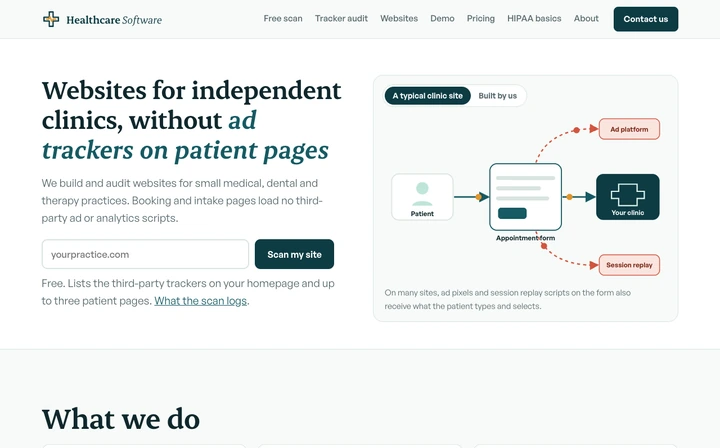
Clinic websites often load ad and analytics trackers on the pages where patients book or fill in forms, which federal guidance warns can send patient information to vendors. Healthcare Software builds and audits sites for independent medical, dental and therapy practices: a $450 tracker audit with a written report and fix list, new sites from $3,900 with no ad trackers on patient pages, and a demo dental practice with a note on each choice.
The free scan reads a clinic's home page and up to three booking or patient pages on the server and lists every tracker it finds, by kind. Because it fetches other people's websites, it's built defensively: results are cached, requests are rate-limited, and it only reads public pages. The HIPAA pages follow the HHS bulletin page by page, including the 2024 court ruling that narrowed it.
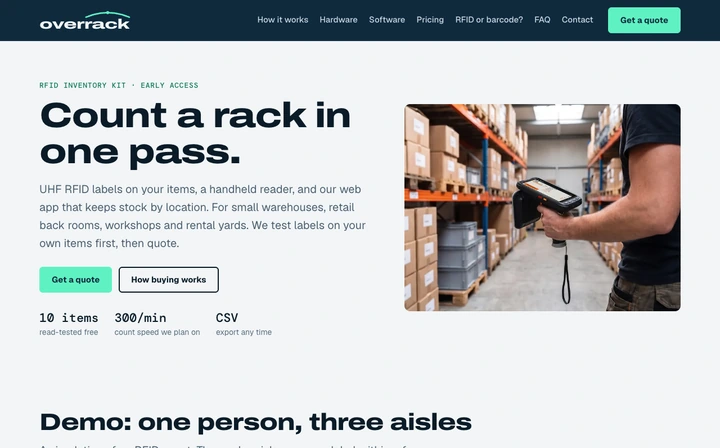
OverRack sells RFID inventory for small warehouses, retail back rooms, workshops and rental yards: UHF labels on the items, a handheld reader, and a web app that keeps stock by location. The home page simulates one person counting three aisles: bins turn green as the reader passes and yellow when stock is under its minimum, with the read radius drawn to scale.
The simulation is plain SVG and JavaScript, no game engine. Beside it, the raw tag codes a reader lists on its own sit next to the same reads in the app, as named items found, missing or in the wrong place. The kit pages explain the handheld, the labels for boxes and for metal, and the counting app, and every pilot starts with a free read test on the customer's own items.
A detailing site for cars, high-end vehicles and boats that explains paint correction with real numbers, shows the difference with before/after sliders, and turns an inquiry into a written request.
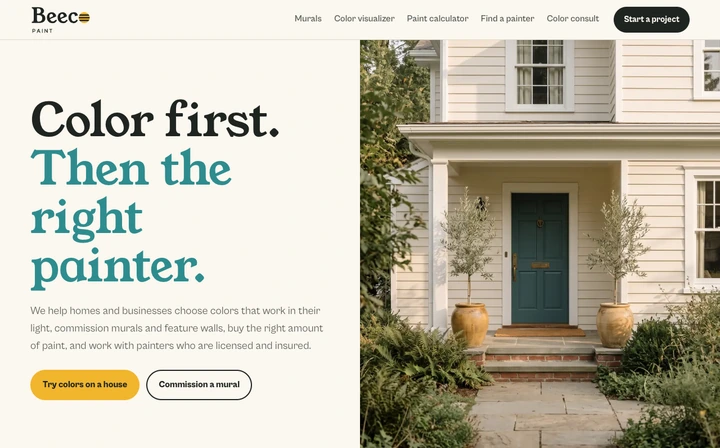
A paint and mural studio site where you repaint photos of real houses in three styles, work out how much paint you need from real coverage rates, and plan a mural on your own wall.
An independent guide to buying a home in Madrid: what a budget buys in each of the 21 districts at real asking prices, the purchase taxes on resale and new homes, and the steps from offer to keys.
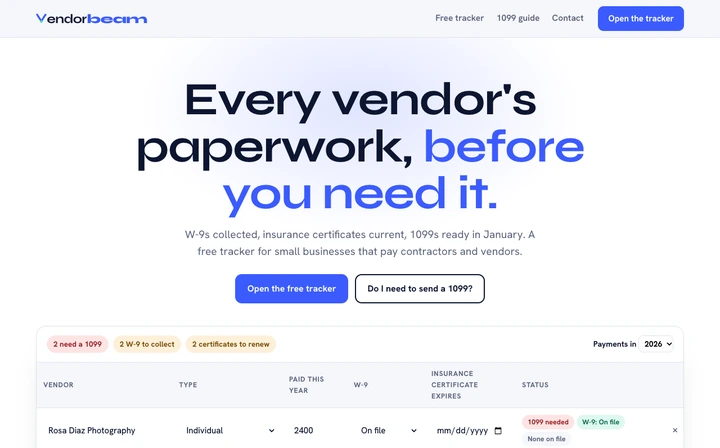
A free vendor tracker for small businesses: W-9s, insurance certificates and payments in one table, with 1099 flags at the right IRS threshold for each year.
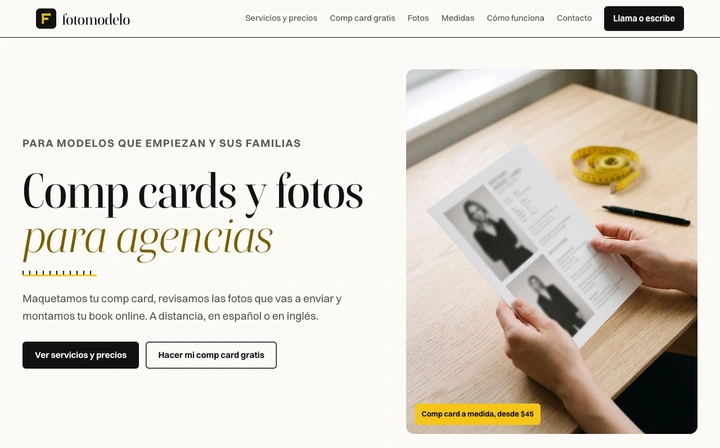
A Spanish-first service for new models and their families: comp cards made to order from $45, a review of the photos and the message to the agency, online books, a free comp card maker and a photo checker that runs in the browser.
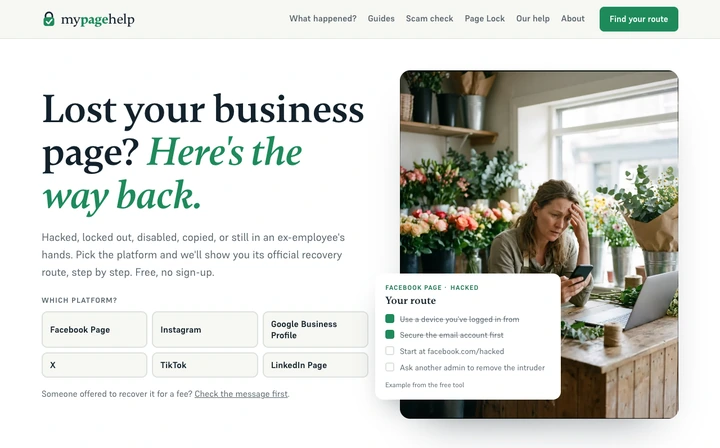
Help for business pages that were hacked, locked, disabled, copied or left with an ex-employee: a free tool that finds the official recovery route on seven platforms, guides, a scam check, an access record and a checklist for when someone leaves.
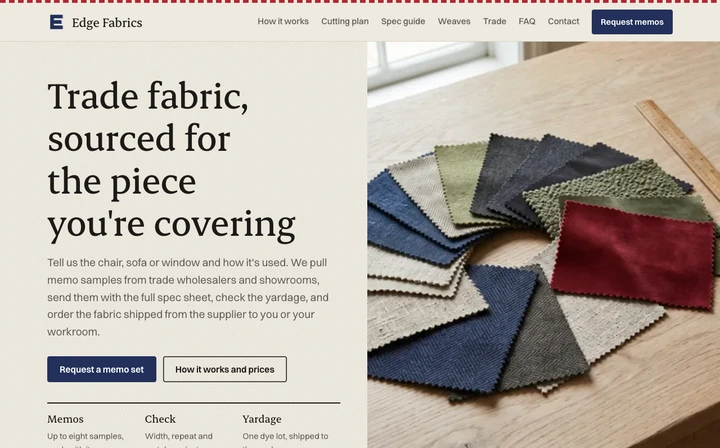
A fabric sourcing service for upholsterers, designers and people re-covering a chair: free memo sets with spec sheets, fabric at the supplier's price plus 15% ($45 minimum), and a cutting plan that works out the yardage.
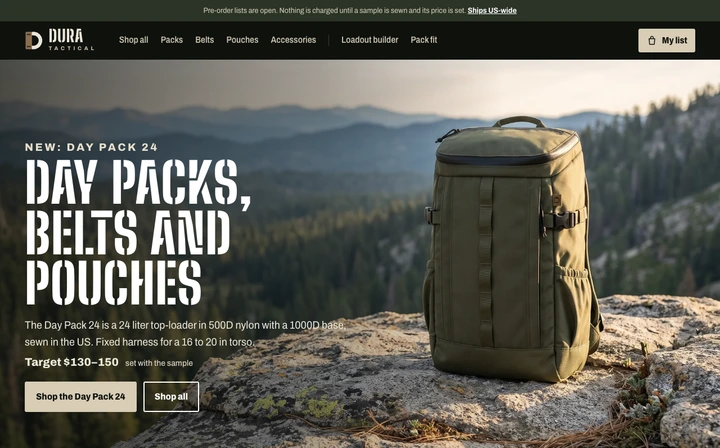
A gear brand with four pieces at the design stage, two day packs, a webbing belt and roll-top pouches, each with a spec tag for its fabric, webbing and hardware. A piece is sewn in the US in a batch of 100 once 100 people ask for it. A loadout builder and a pack-fit tool are free.
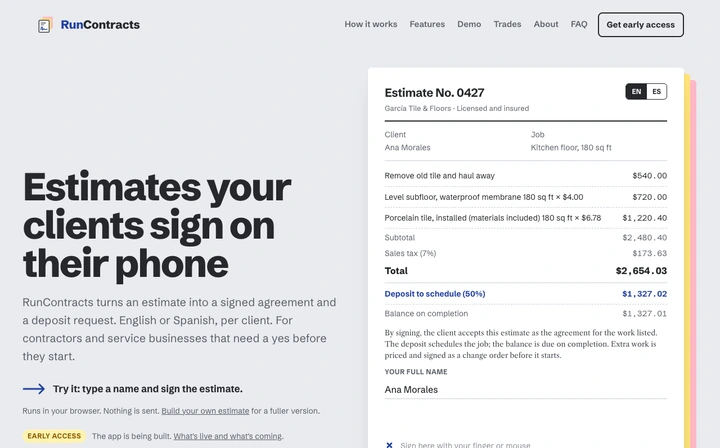
A site for an estimates-and-contracts app for contractors: an estimate you sign on the home page, English or Spanish per client, deposit requests and follow-ups, pages for each trade, and early access.
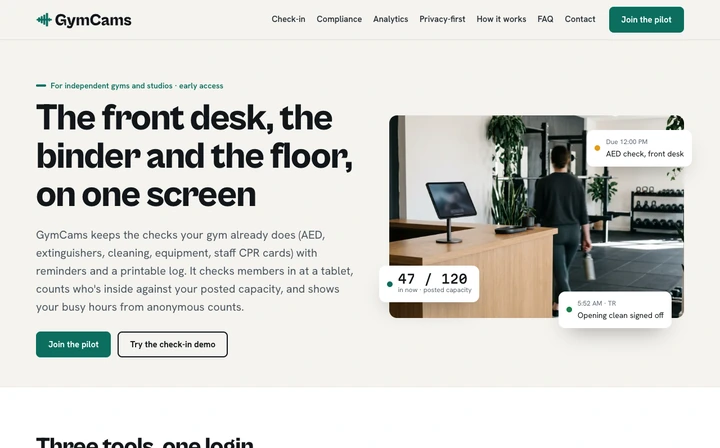
Software for independent gyms and studios, in early access: member check-in at a tablet, a compliance binder for AED, fire, cleaning and staff checks, and busy hours from anonymous counts. It never does face recognition, and video stays in the building.
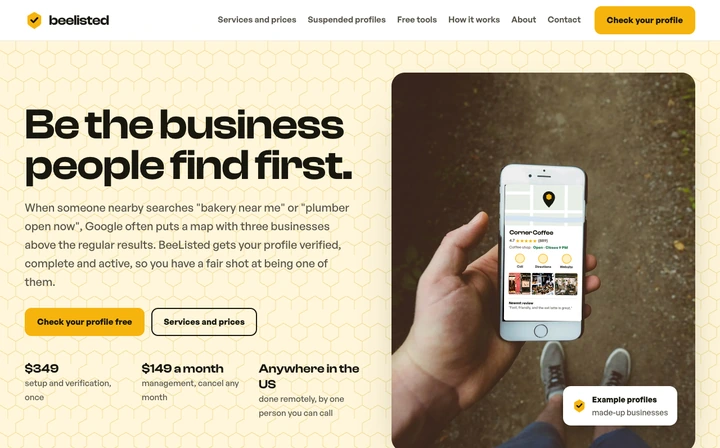
A Google Business Profile service: setup and verification for $349, monthly management for $149, suspension recovery, and four free tools, from a profile check that ranks the fixes to a business name check and a review QR card.
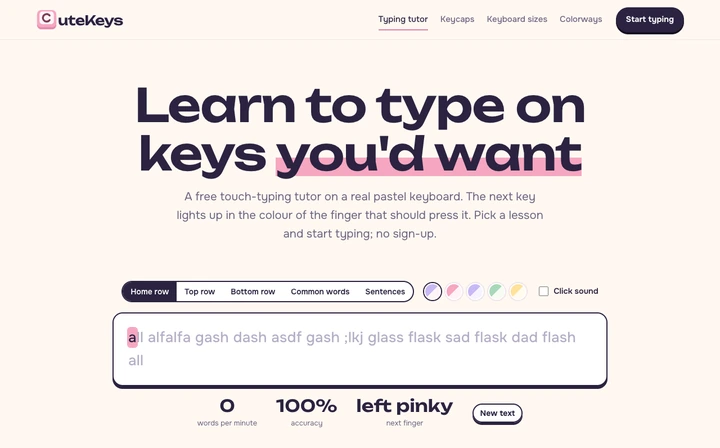
A free typing tutor on a photo of a pastel keyboard where the next key glows in the color of the finger that should press it, with keycap and keyboard-size guides.
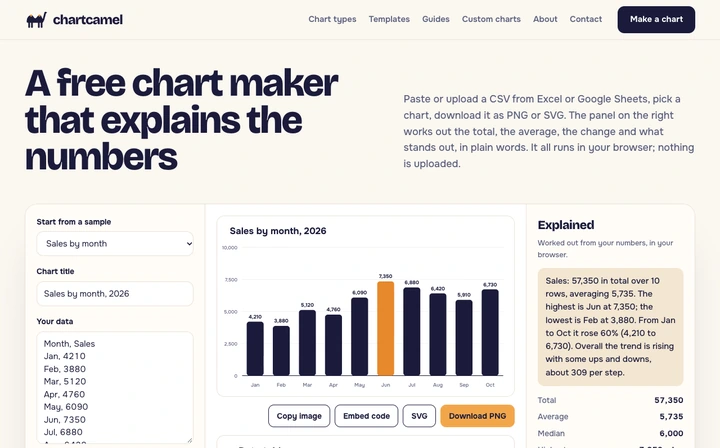
A free chart maker that explains the numbers: paste or upload a CSV, pick one of eight chart types, download a PNG or SVG, and read the total, average, change and trend in plain words. Nothing is uploaded.
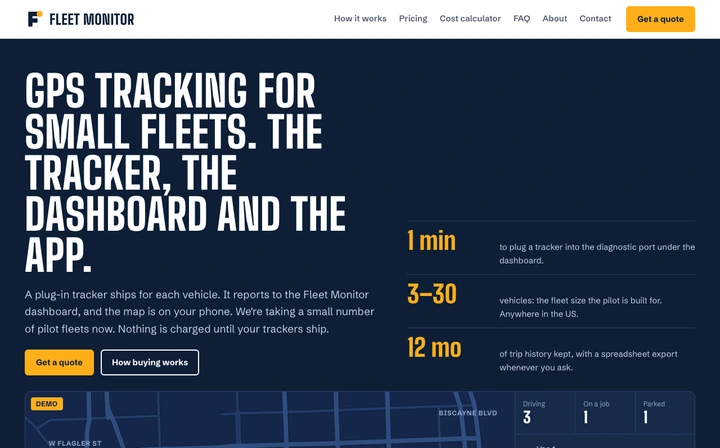
GPS tracking for small fleets: a plug-in tracker, a dashboard and a phone app from one company, a demo map with made-up vans on real streets, engine readings, and a pilot for fleets of 3 to 30 vehicles.
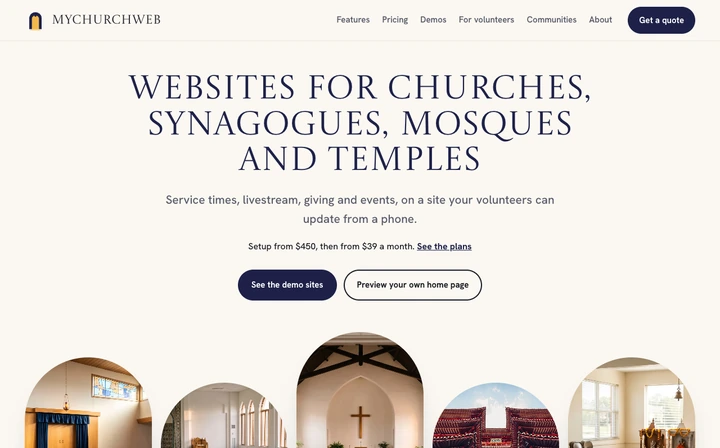
Websites for churches, synagogues, mosques and temples that volunteers keep current from a phone: three plans from $450 to set up and $39 a month, two demo sites, and a preview of your own home page.
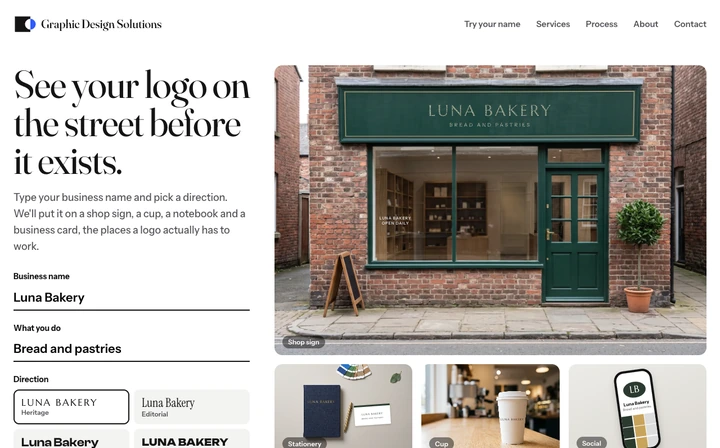
A logo and brand design studio's one-page site where you type your business name and see it as a logo on a shop sign, a cup, a notebook and a business card.
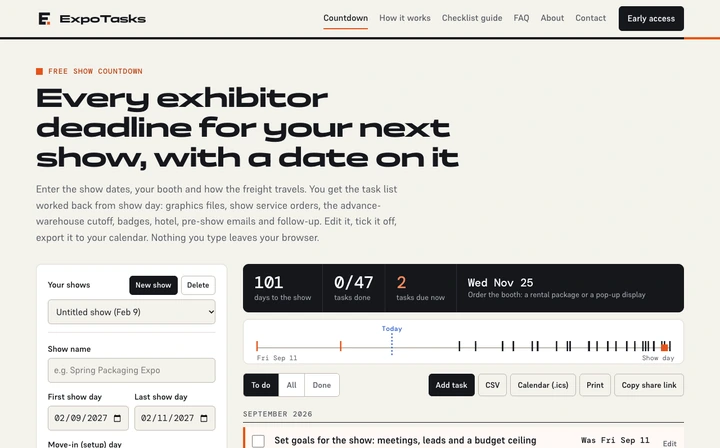
Trade show planning for small exhibitor teams: a free countdown turns the show dates, booth size and freight into about fifty dated tasks you can edit, tick off, print or add to a calendar, and nothing typed leaves the browser.
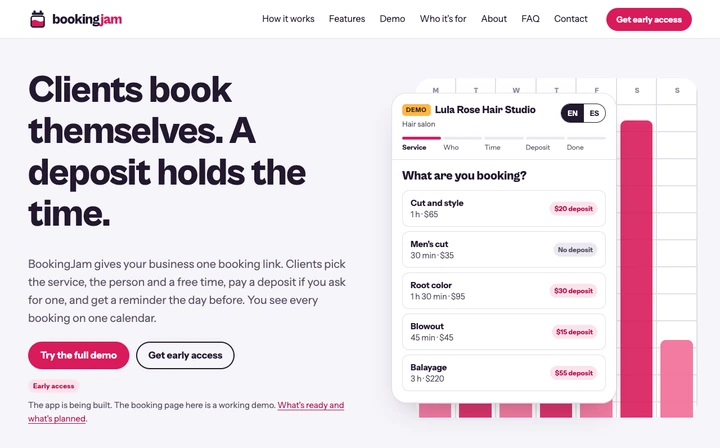
Online booking for appointment businesses: a working demo books a free time with hours, breaks and buffers taken out, takes a deposit, and drops the booking on the owner's calendar, in English or Spanish.
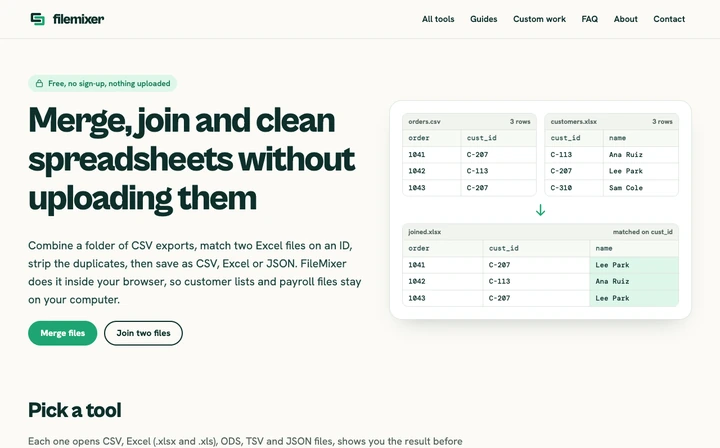
Free spreadsheet tools that run in the browser: merge files, join two files on a column, remove duplicates, split, clean and convert between CSV, Excel and JSON. A strict security policy keeps the page from sending files anywhere.
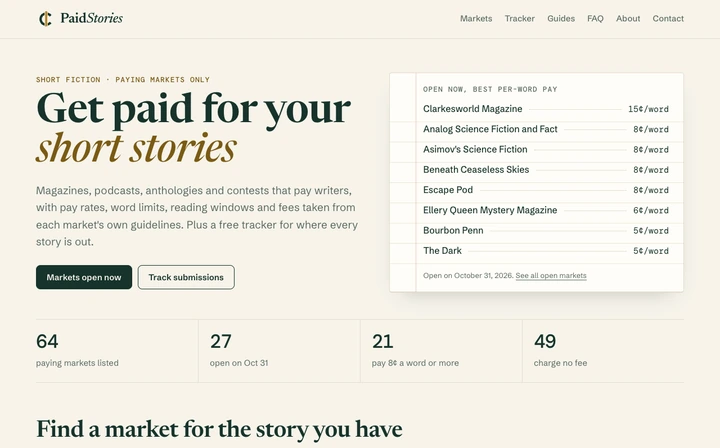
Magazines, podcasts, anthologies and contests that pay for short stories, with rates, word limits, reading windows and fees copied from each market's own guidelines and dated, plus a free submission tracker.